Does Someone Know When You Delete a Comment on Facebook
Negative comments can be expected on the Facebook pages of even the most loved brands. What should yous practise when those comments land on your folio?
Nosotros've all had information technology happen: A negative comment on a Facebook Page postal service glares at you from the screen.
Our first instinct (or at to the lowest degree, mine) is to hide the negative annotate or somehow bury it, so it won't hurt the post or my concern. Nosotros do, afterward all, have the option to hide comments on Facebook.
So, should you actually hide comments or negative mentions on your Facebook Page?
The short answer: sometimes, aye, and sometimes, no.
Either way, y'all shouldn't automatically hibernate negative comments just because they're negative.
There are pros and cons to hiding comments on Facebook, and other strategies you lot tin can use instead. (Y'all can become an overview of Facebook marketing in this gratuitous downloadable Facebook 101 guide.)
Related Mail: How to Remove a Page from the Facebook Business Manager
The first type of comment that volition typically trigger our "hide" reflexes will be negative comments well-nigh our content or our brands.
Not only do they make us automatically defensive, just negative sentiments shared online can hurt our businesses.
Because social media oft acts every bit powerful discussion-of-mouth marketing, we want comments to work in our favor.
You should consider hiding other comments, such as:
- Blatant spam. These comments may send users to broken links or sites with viruses and malware.
- Self-promotion from other users. One case I see the most often is users trying to put their "refer a friend and get $15" codes on the business'due south posts to rack upwards referral bonuses.
- Inappropriate content or language. This includes explicit language, sexual content, or racist, homophobic, or sexist comments.
Pros and Cons
The pros of hiding negative comments on your Facebook Page are clear. Ideally, you'd protect your concern'south reputation and eliminate any negative sentiments from your posts.

Information technology can actually hurt your Folio if yous've got a ton of spam in comments on every postal service that you don't hide or delete.
The final affair y'all want is someone turning your mail service into a hotbed of controversy that has zero to do with the original status.
Nipping all of this in the bud can benefit you.

This annotate could potentially hurt this business; it's pointing out the flaws of the concern while recommending a competitor instead.
You should consider, however, the cons of hiding comments on Facebook. (Peculiarly when yous hide comments that aren't offensive and but criticize your concern. If users notice—and many volition—there tin be a perceived loss of transparency.)
Social media is all well-nigh transparency, so people may non trust you, leading to a loss of customer loyalty.
In rare cases, users who notice that you've deleted their comment tin can get angry—really angry—when they're already agitated and tried to complain virtually a product or client service.
Deleting their comment may not practice you lot much good. They might go out you a scathing one-star review or very vocally accept their opinion somewhere y'all can't control information technology—like their own pages.
Though you can't avoid fallouts with all of these so-aroused-their-eyes-are-jutting-out-of-their-heads customers, reducing collateral damage is a plus.
When you go to hide a comment, you'll meet that yous can also delete the comment or ban the user who left it.

Once yous've hidden a comment, yous can unhide information technology, delete it, report information technology, and ban the user.
Yous have three options in regards to negative Facebook comments:
- Hiding the Facebook comment volition keep information technology hidden from everyone except that person and their friends. They won't know that the comment is hidden, and so you can avoid potential fallout.
- Deleting the Facebook comment will erase it; no one volition be able to come across it. The user will know that the negative comment has been deleted if they become to view information technology again, merely they won't be notified of its deletion.
- Banning users will proceed that item user from commenting on any of your posts ever again. This is a good move for users that are unreasonable and seem to enjoy leaving negative comments every take chances they get, or for users who driblet spam or offensive content on your posts.
Options
Instead of jumping to hibernate comments on Facebook posts automatically, ask yourself whether there's some other way to resolve the situation.
Address the trouble
Sometimes, users really are only frustrated.
Remember that a bad customer experience turned into a practiced i tin create some of our most vocal advocates for our brands in the long run.
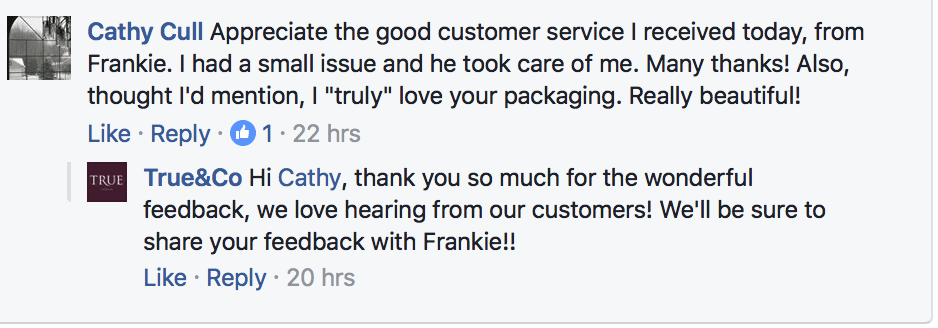
Resolving issues for unhappy customers tin turn them into loyal, raving fans.
Addressing comments head-on tin sometimes be the best approach.
Show other users that your brand is ready to pace up and resolve complaints. If yous tin solve their problem publicly, other users will take discover.
Lyft does this extremely well, as pictured in the example below.
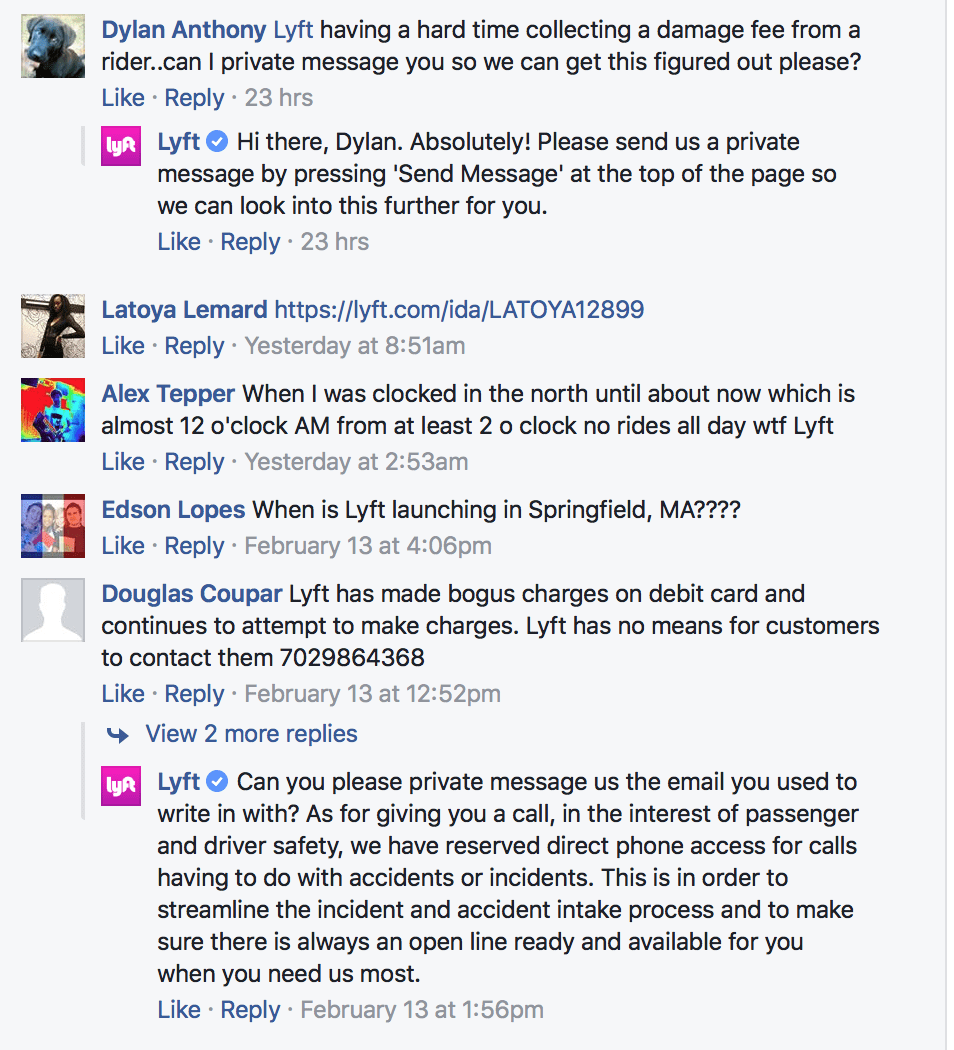
If you lot tin can't offer an immediate solution, reply to the comment and enquire the user to move to a private bulletin to resolve the issue. Many users will be willing to practice this.
If they aren't, y'all still look good for having publicly attempted to get to the lesser of their complaints.
Sometimes, though, hiding is the best selection.
Comments that tin can hurt your business should be subconscious if they can't be addressed. Catch the annotate early before it gets much visibility or whatsoever traction with engagement.
Similarly, comments who come from users who will just stay unhappy no matter should be hidden if they're at take chances for impacting other users' perception of you.
More details: Social Media All-time Practices to Help Guide You lot During Whatever Crisis
There are some cases when you should always hide comments, if not delete them or ban their creators entirely.
This includes comments that:
- Are blatantly spam
- Are offensive or inappropriate
- Have been reported past other users
- Come from "trolls" or users determined to drag your proper name through the mud
In all those cases, go alee and delete the comment completely and ban the user; they'll about definitely bring problem back to another thread later.
Hiding a comment on your Facebook Page may seem like an extreme pick, simply this option actually is 1 of the tamer ones.
Deleting the comment ensures that no one can see it, and banning the user means they can never collaborate with your Page again.
Keep an eye on users if you've had to hibernate their comments earlier. (If you need help with your Facebook management, you'll want to
If their first comment isn't worthy of banning them outright (which it would be, for example, if they were antagonizing other customers) but concerns you, put a label on the user through Agorapulse. This will only be seen by yous or your team, and allows you to flag users who may be an issue moving forward.
If at that place are echo bug, you may be able to spot them easier and act more decisively to ban them outright.
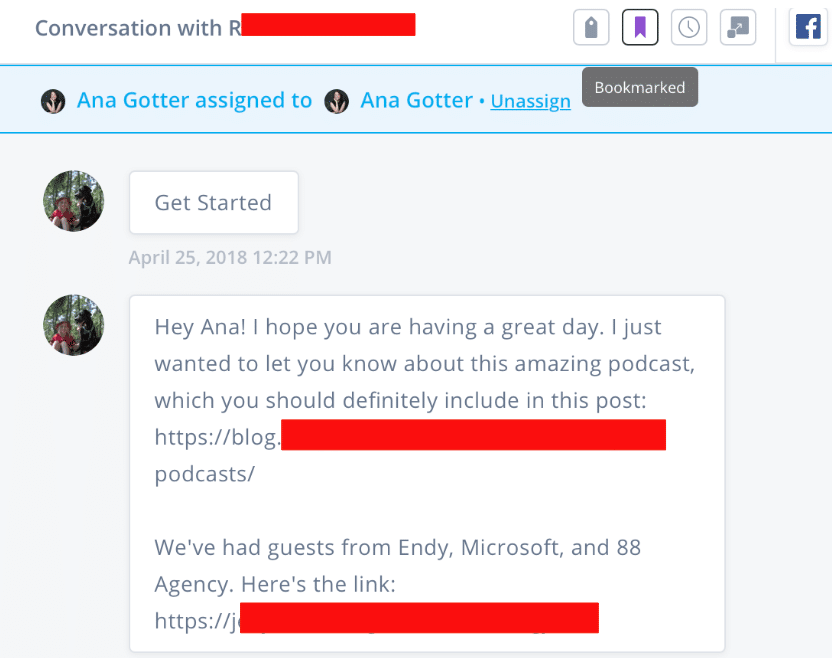
If you lot do decide to ban someone, deleting their comment is typically warranted.
Deleting may also be a stiff option when the comment doesn't offering any value whatsoever.
(Sometimes negative comments do offering some sort of value, even if it's just for their friends and followers to see your level-headed response.)
For example, sometimes someone will comment about my appearance on my professional Facebook Page. I'thou personally in the army camp that this is never OK. The comments range from borderline similar "so pretty" to more obscene ones.
Here, I originally hid the comment, but later went back to delete information technology altogether when I actually established a no-tolerance rule in my professional business.

If you're on a social media direction team and want to let the business owner make up one's mind what to exercise, continue in mind that yous can always hibernate the annotate for now and delete it at a afterward date.
You lot tin can have this approach when yous feel that a user may be lying or exaggerating virtually something. You can hide the comment to practice some fact-checking before you accept more decisive action.
For example, I once worked for a brand where this was the case: Someone said their daughter had been carted out of the eating house in an ambulance because her shellfish allergy was ignored.
I paused hid the comment while I did enquiry, simply to find that not but did the incident never occur but that the restaurant was vegan—no shellfish in sight.
The hibernate button gives you enough time to make a decision, so a bad snap judgment isn't made.
Should I Respond to the Annotate Instead of Hide It?
Part of this will come up downward to a bit of gut instinct.
If you read a comment and it reads like a legitimate complaint from a frustrated customer, you'll get further in the situation by confronting it head-on.
Transparency
I've been the client because a brand, seeing a negative comment on one of the brand's ads, so noticing an hr afterwards that the comment is mysteriously gone.
That doesn't read similar great transparency to me. It'southward really stopped me from purchasing before. I'm far from the only ane.
Consumers today are savvier than ever earlier, and they're less trustful of brands.
If you hide that annotate, as well, remember what we said earlier. If the client figures it out, they could become really angry, peculiarly if they're already at a tipping bespeak.
Reaching out directly, addressing questions, and offering to detect a solution is a better way to go hither. They'll appreciate it, it gives you a chance to rescue a guest experience, and other users volition have notice, too.
More details: How to Rightfully Earn Trust From Your Network Followers
Comments That Should Be Left Solitary
You don't really need to respond straight to some comments.
Though I'm a big fan of trying to engage with everyone who interacts with y'all on your Folio or your Advertising, at a certain scale, it becomes so difficult. We're all used to seeing naysayers everywhere we go.
Most consumers are pretty good at spotting and writing off people who just want to mutter.
Permit's take a look at an example.
The first ii comments on the following ad from Freshly are negative, arguing that the production is pointless. It's as well expensive, it's non really homemade … On and on they go.
These comments may dissuade some tentative users from learning more than, but the true audition for these ads—those who are struggling to brand dinners at domicile for whatever reason and demand a little help cooking—won't necessarily be put off by their comments.

The brand didn't fifty-fifty need to respond, every bit it turns out because Christine Potter came in and argued on the brand's behalf. That looks so much better to third-parties than a defense from Freshly itself probably would have. She argues for the validity of the service and explains how information technology's benefited her.
Yous should monitor your campaigns, fifty-fifty if y'all don't necessarily need to hide all comments.
You so can accept action if annihilation escalates.
How to Hide Comments on Facebook
To hide comments on Facebook'south native platform, all you lot accept to exercise is hover over the comment. Yous'll see a drop-down arrow; when you click on information technology, you lot'll see the option to "hide comment" or "embed."
Just click "hide comment."
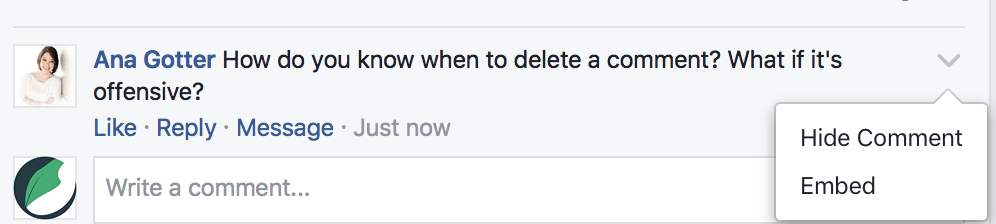
Afterward you do this, you lot'll meet other options y'all can take, including "unhide," "delete," and "ban user."
Agorapulse'due south moderation tools make it incredibly simple to find comments that need your attention rapidly. You lot can view all comments under the "Inbox" tab and select your Facebook Page. To hide a comment, click on it.
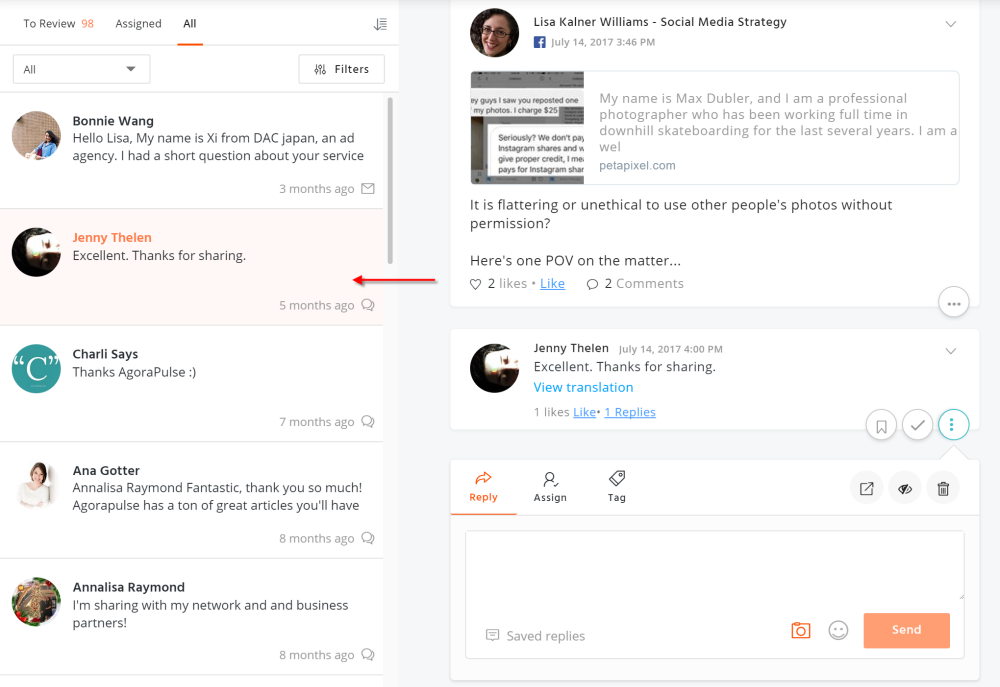
The post and comment will be fully displayed, and y'all can cull to hide, bookmark, or remove comments.
Once you've subconscious a comment, you can unhide information technology at any time from the Agorapulse dashboard.
If you want something more automatic, yous can set up moderation rules that will trigger deportment upon seeing certain keywords. If, for instance, you don't want a whole bunch of comments or "visitor posts" with links to external Websites or contests, set a rule to filter out "http."
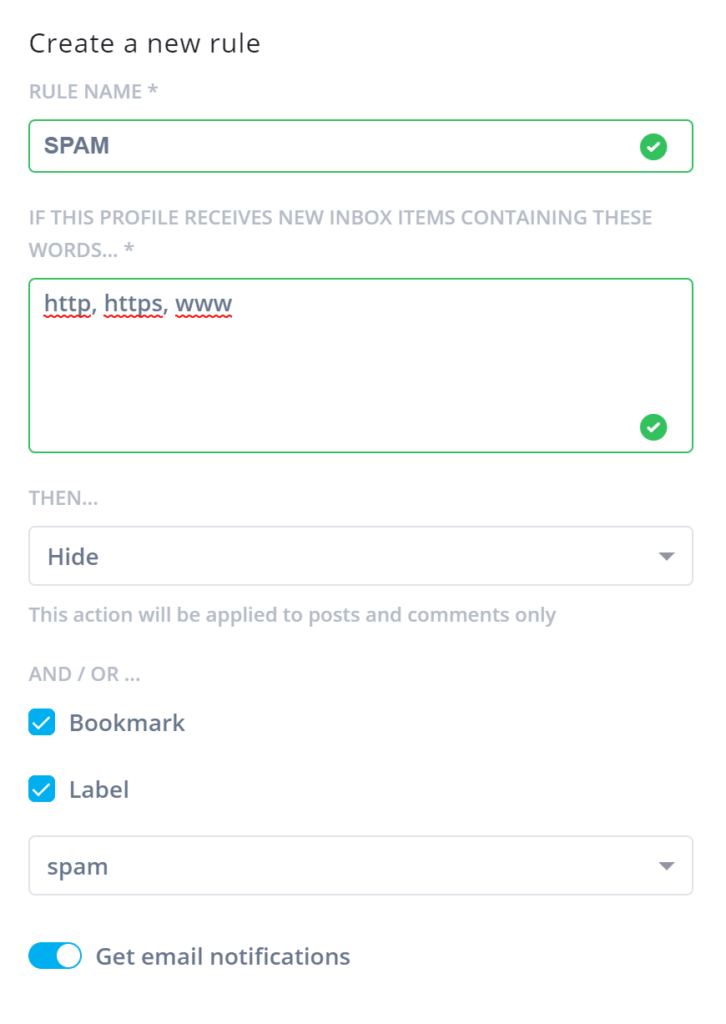
Then tell Agorapulse what you lot desire to be done with any comment that features "http." In this case, I gear up the tool to bookmark, tag, and hide comments and visitor posts with that trigger.
You come across the "electronic mail notification" in the above illustration?
I've as well said "yes" to receive emails each time the rule is triggered.
Here'southward an email I recently received nigh a visitor postal service that included a Website link.
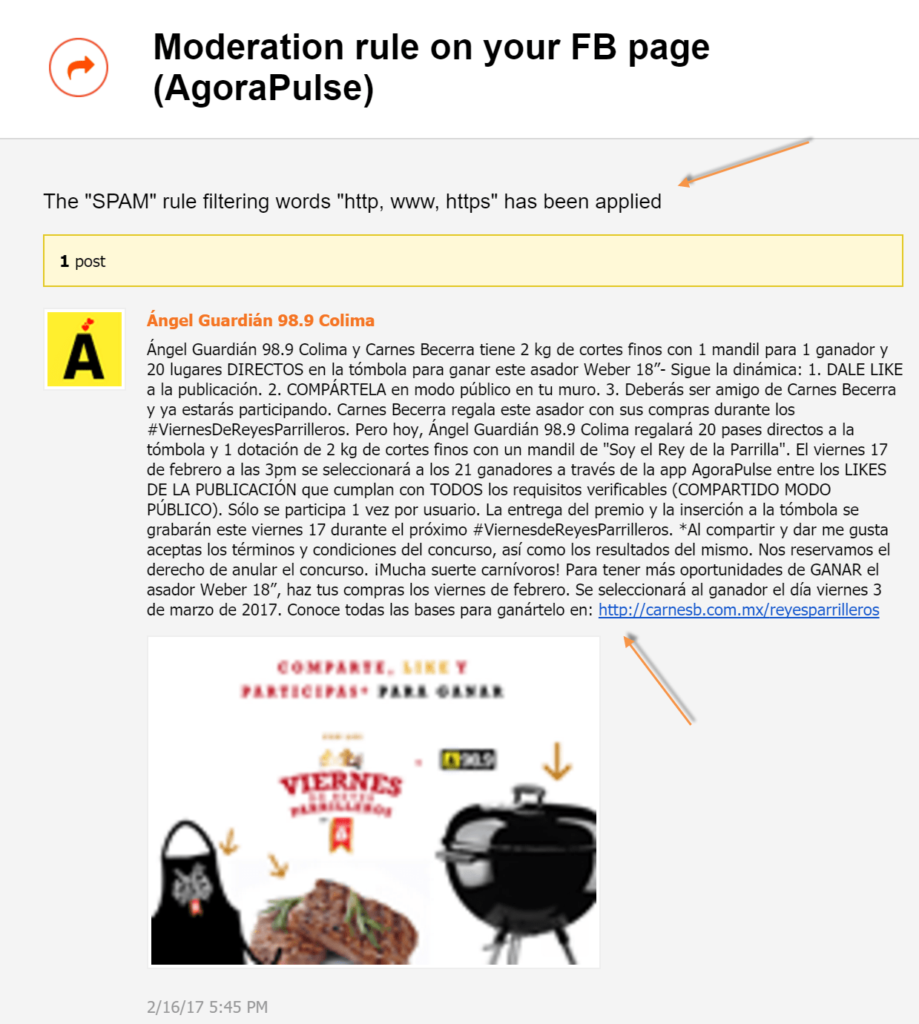
I can and so decide to keep information technology subconscious (thanks to the dominion I gear up) or if for some reason, that comment/link was important, I tin can go into Agorapulse and "unhide" it.
All-time Practices
In addition to all the strategies and situations discussed in a higher place, in that location are a few Facebook all-time-practices to keep in listen when hiding comments on Facebook.
Hibernate them early
Nosotros discussed this above briefly, only it was important enough to mention information technology again. If you're hiding a comment, you lot have a expert reason; make sure you take it off display as shortly equally possible to mitigate any potential damage it could do.
Address information technology if other users ask
Some users (or even the original commenter) may find the subconscious annotate and generate further discussion about information technology; since the potential loss of transparency is huge, address the issue if it comes up. Explain clearly why you hid the comment: was it offensive? Did the user have a history of leaving negative comments? If you hide a comment, yous'd better accept a good reason—and this is why.
Always consider alternative actions first
While we've all got an itching trigger finger when nosotros accept the opportunity to delete negative sentiments about our brand, don't spring to hit the hide button immediately; consider what other alternatives yous have, and what would be most productive. The last thing you desire is for users to trust y'all less when you lot had an opportunity to increase their trust further.
In Decision
Hiding comments on Facebook can injure yous or help you, depending on the comment in question. In some cases, hiding comments won't be the best motion; instead, y'all should address the comment caput-on for more than productive and beneficial results. Either way, the features in Agorapulse make it easier for you to decide which action to take.
Become started on saving time and energy on your own social media direction! Check out our gratis trial of Agorapulse to help you schedule, track, and measure out all your social media efforts.

Source: https://www.agorapulse.com/blog/hide-comments-on-facebook/
0 Response to "Does Someone Know When You Delete a Comment on Facebook"
Post a Comment